
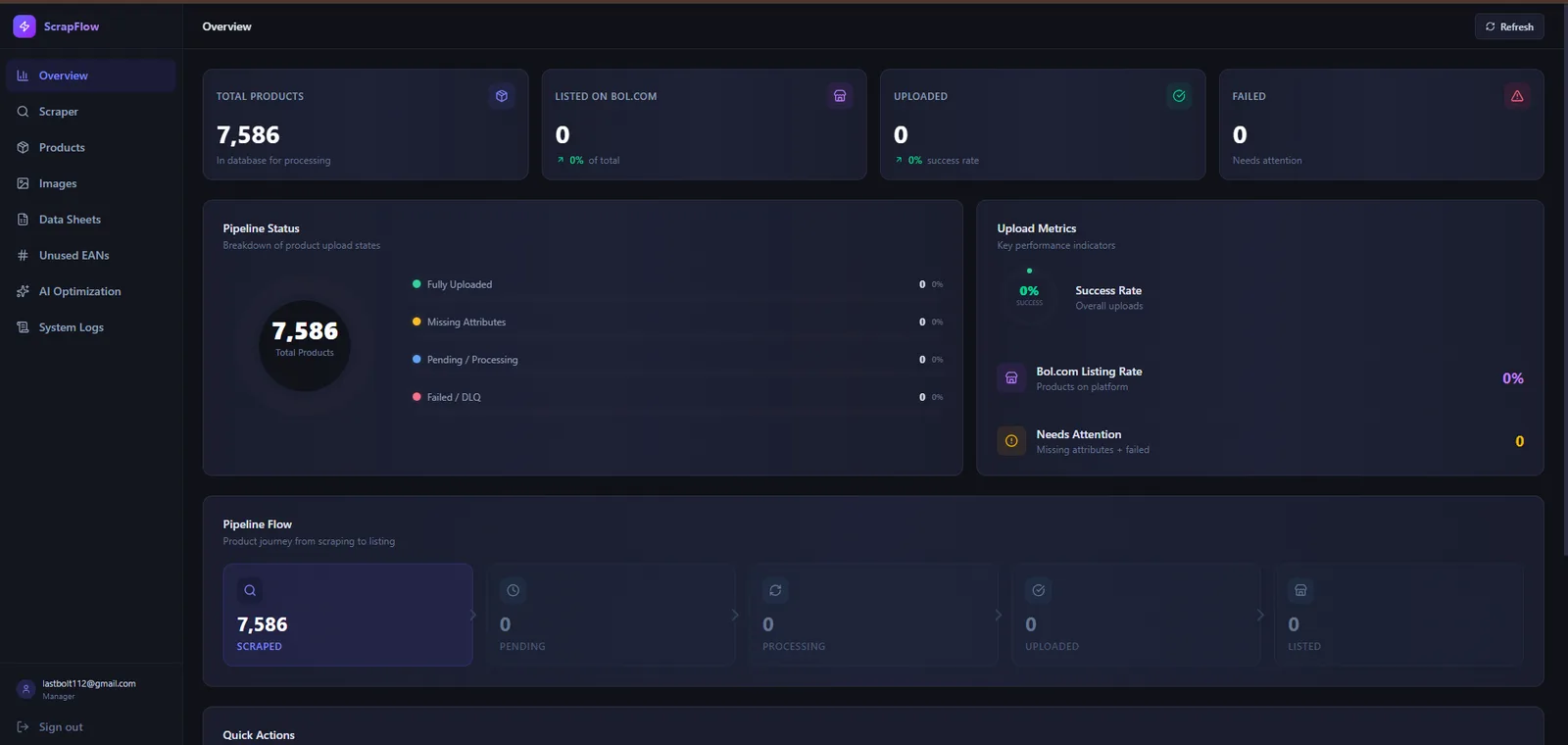
7,586 Amazon products, scraped, cleaned by AI and staged for Bol.com.
●METRICS
Production telemetry, active capacity, and engineering scale measured in live deployment.
01 — What it does
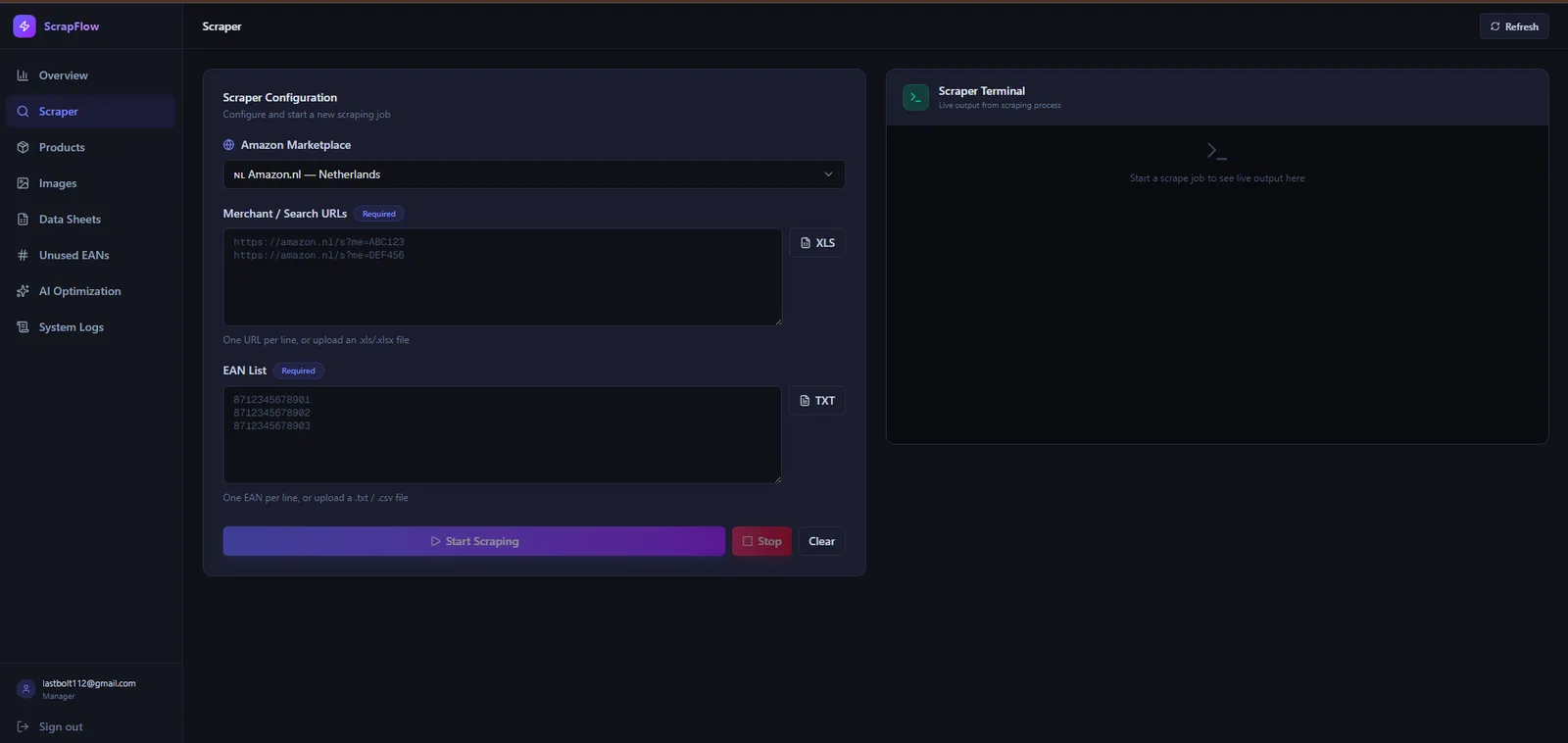
ScrapFlow is a product-sourcing pipeline built for Kafuland, a Bol.com seller. A manager pastes merchant or search URLs and an EAN list, or uploads them as XLS and TXT, picks the Amazon marketplace and starts the job. A live terminal streams the scrape, and every product lands in the database with its images, data sheet and upload state.
The overview tracks each product through five stages, scraped, pending, processing, uploaded and listed, and flags anything with missing attributes or a failed upload so nothing silently drops out of the pipeline. At the time of writing, 7,586 products sit in the database.
Placeholder write-up · full case study coming
02 — Module surface
Every discrete surface designed, engineered, and shipped in production. Zero placeholder concepts — 100% functional software.
03 — Technical highlight
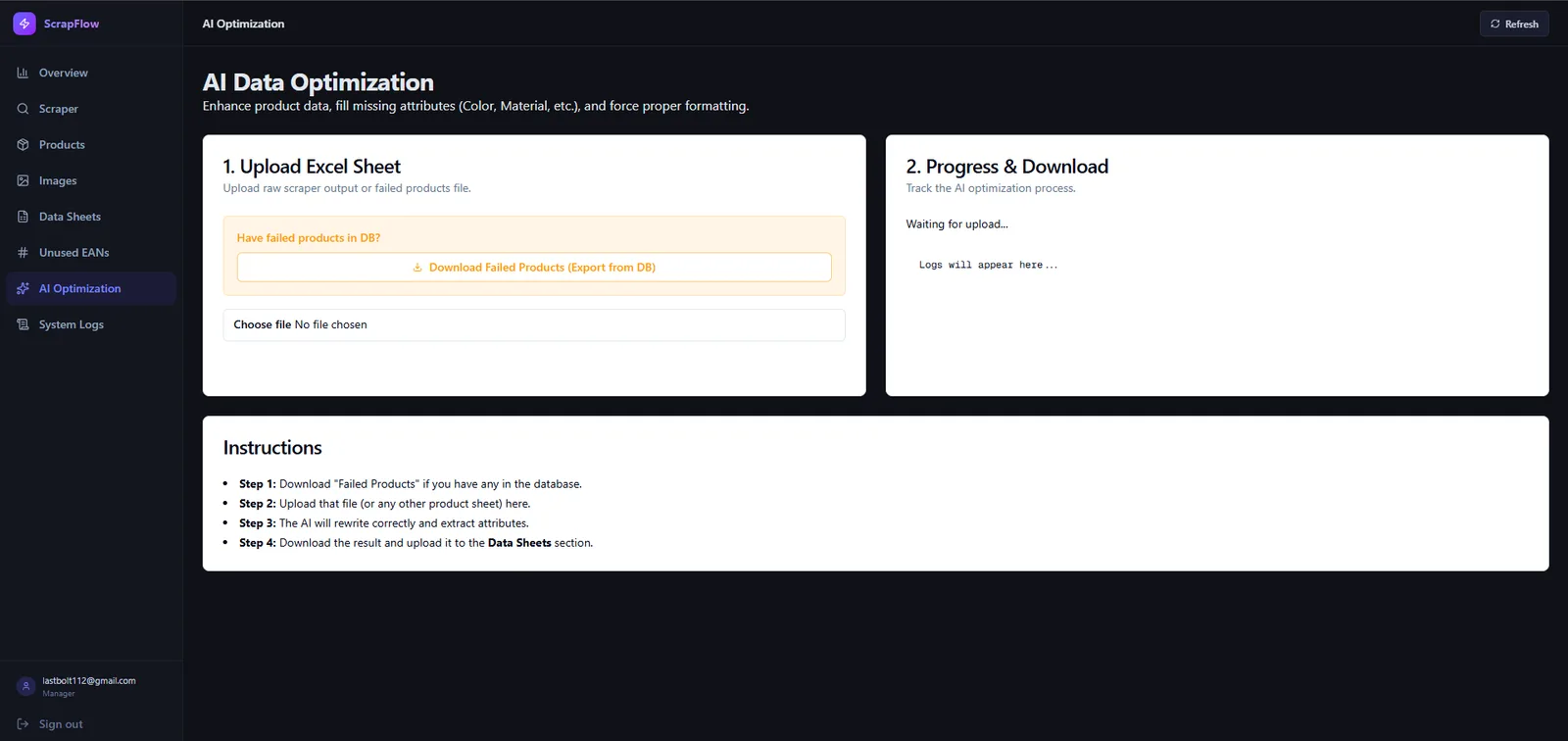
Raw scraper output or the failed-products export goes in as a sheet. The AI rewrites titles and descriptions, extracts missing attributes such as colour and material, and forces the formatting the marketplace expects. The result downloads as a corrected sheet that feeds straight back into the Data Sheets module.
Eight modules share one product record, so the count on the dashboard, the rows in a sheet and the entries in the log always agree. Role-based accounts keep the manager view separate from day-to-day operators.
04 — Stack and outcome
Every dependency is chosen deliberately for raw execution speed, strict type safety, zero cold-start latency, and battle-tested reliability under high concurrent load.
"This write-up is a placeholder from the dashboard screenshots. The full case study, with the pipeline numbers and the listing results, is coming."